Credit control across multiple entities
Run one credit control process across every company in your group.
- Every entity under one Trove login
- Each brand, currency and time zone kept separate
- Entities split across your team
Trusted by finance teams around the world








“It has made a significant difference in our ability to manage credit control and support our clients.”
Justine Marshall
Director

How multi-entity support works in Trove
-
1
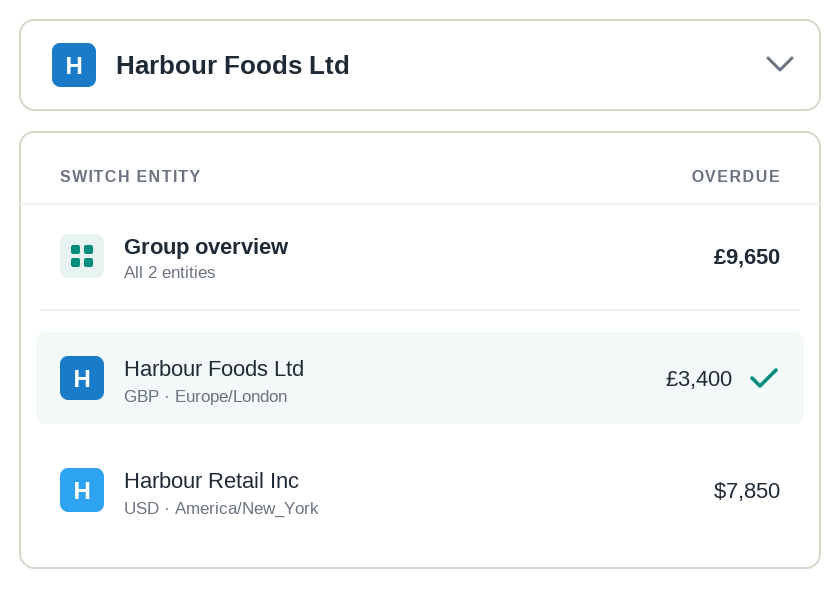
One login, with an overview of the whole group
Your accounting system keeps each company as a separate file, so without Trove a group ends up with as many logins and credit control processes as it has companies.
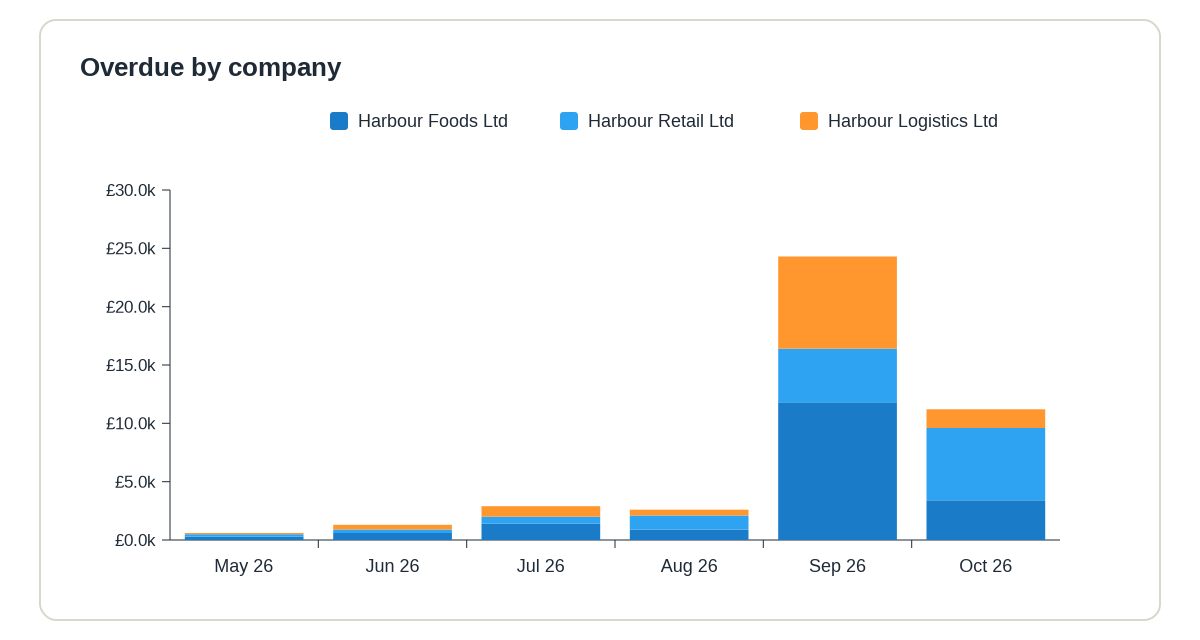
Trove puts every entity under one login. Switch between companies in one place, and see where overdue debt sits across the whole group with group reporting.
-
2
Keep credit control separate for each entity
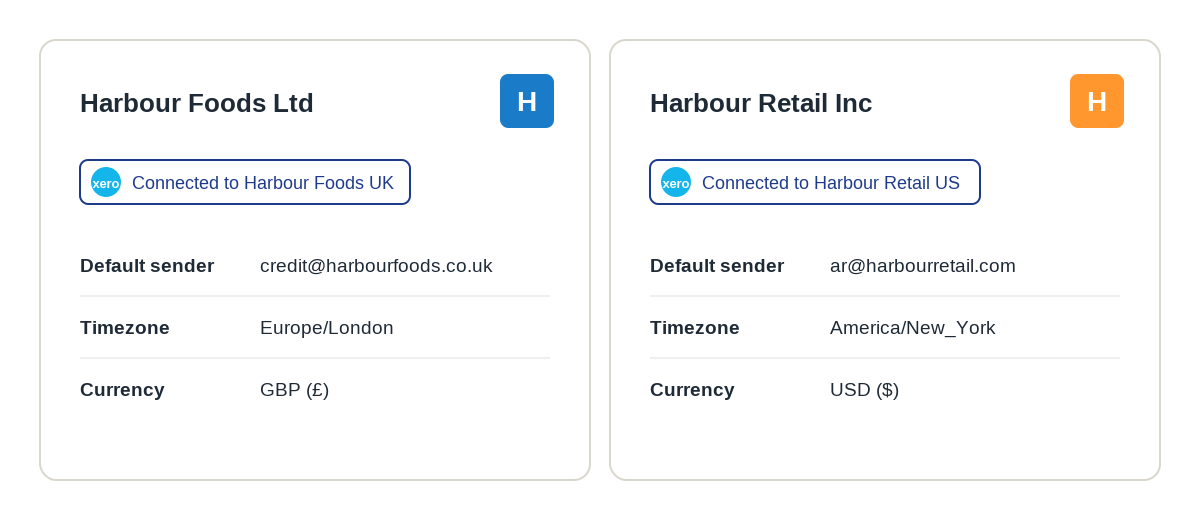
In Trove, each entity chases from its own email address and branding, so a client shared by two of your companies is always chased by the right one.
Every entity has its own currency and time zone, and syncs with its own accounting file, so notes and emails land in the right company's records.
-
3
Split the group's chasing across a team
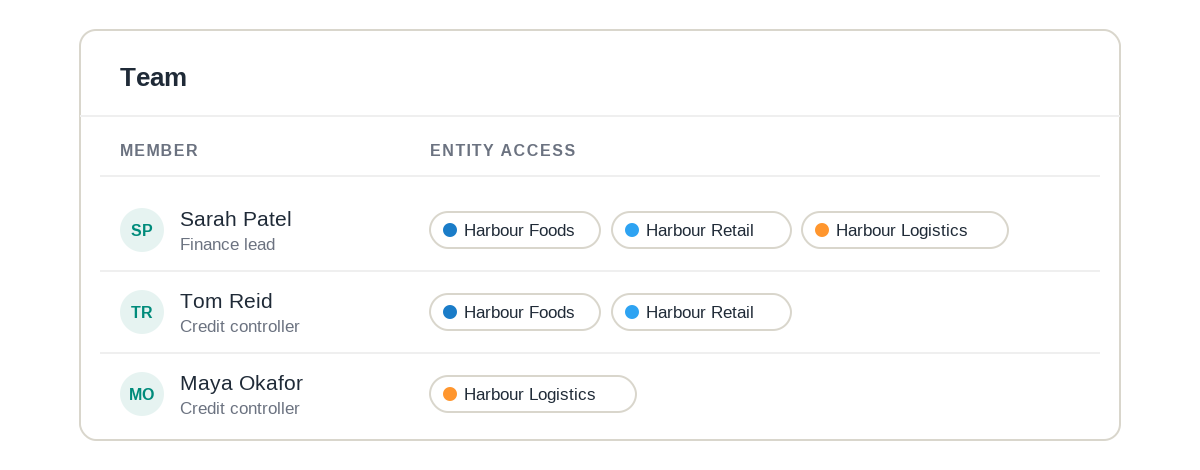
In Trove, give each person access to the entities they look after. One credit controller takes half the group and a colleague takes the rest, each chasing from their own address.
The finance lead still sees every entity in one place, and the Advanced plan has a fixed monthly price however many companies you add.
Resources on multi-entity support
- Year-end audit
The year-end debtors audit checklist
A year-end debtors audit checklist: ten checks covering the aged list, bad debt provision and customer confirmations, with how to verify each one.
Read now - Team roles
Credit control team roles and who does what, including sales
The five jobs in credit control and who owns each: the credit controller, the finance lead and the account manager, with the decisions each one takes alone.
Read now - NetSuite
NetSuite accounts receivable automation for UK finance teams
What NetSuite automates in accounts receivable, where its dunning stops, and when a UK finance team adds a credit control tool, with a comparison table.
Read now - Multi-entity
Running credit control across multiple entities in Xero
Xero treats every entity as separate, so a group can end up with an inconsistent chasing process. How to run consistent credit control using Trove.
Read now - Onboarding
How to onboard a group of companies onto Trove, entity by entity
Here's how to onboard multiple entities onto Trove, starting with one and then cloning the process to the remainder.
Read now - Groups
Bringing credit control in-house across a group of companies
Bringing credit control in-house can make sense if your setup needs context and your provider is struggling. Here's when it works across a group.
Read now - Reporting
The credit control reports that matter when you run a group
Here are the four credit control reports worth having across a multi-entity group of companies and why.
Read now - Reporting
The monthly debtors meeting pack: what your CFO wants to see
The five tables for a monthly debtors meeting, shown by entity with a worked example across two companies, and the questions your CFO will ask.
Read now - Customer groups
Customer groups with many sites: head office or each site?
When to chase a customer group's head office with one statement, when to chase each site, and how to run both without chasing anyone twice.
Read now - Accountants
How practices can offer credit control as a service to clients
How accountancy practices scope, price and run a credit control service for clients, and what to agree before the first chaser goes out.
Read now - Accounting firms
Credit control software for accountants in the UK (2026)
How accounting firms chase their unpaid fees, handle late fees, and use the same tool for delivering credit control for clients (2026 UK guide).
Read now - Business Central
How to chase overdue invoices in Microsoft Dynamics 365 Business Central
Set up reminder terms and levels, send reminders and statements in Business Central, and see what it can't do for a chasing team.
Read now - Business Central
Credit control software for Microsoft Dynamics 365 Business Central
Credit control software for Dynamics 365 Business Central compared: Trove, Chaser, Kolleno, Credit Hound and an in-app option, with prices and fit.
Read now - Xero
Best credit control software for Xero in 2026
Credit control software for Xero compared: Xero's reminders, Trove from £65, Satago and Chaser. Team size, Xero sync and prices checked Nov 2026.
Read now - Comparisons
ezyCollect pricing and alternatives: what it costs in 2026
What ezyCollect by Sidetrade costs, how its reminder workflows work, and how Trove, Chaser, Upflow and Kolleno compare for mid-sized finance teams.
Read now
Multi-entity support: common questions
Everything you need to know
Can Trove manage credit control for multiple companies?
Yes. Multi-entity support is on the Advanced plan. Every company in your group sits under one login, and you can run the same chasing process across all of them.
Do I need a separate login for each company?
No. All your entities sit under one login, so you switch between them in one place rather than logging in and out of each accounting file.
Can each company chase from its own email address?
Yes. Each entity sends from its own address and branding, so customers shared by two of your companies are always chased by the right one.
Can different entities use different currencies and time zones?
Yes. Every entity can have its own currency and time zone.
Can I limit which companies each team member sees?
Yes. You can give each person access to the entities they look after, while the finance lead sees the whole group.
Does Trove charge per entity?
No. The Advanced plan has a fixed monthly price, with no charge per entity or per user.
Related features
-
Credit control reporting
Live reports on overdue invoices and debtor health, with your own reports and group reporting on bigger plans.
-
Send from a custom domain
Every reminder comes from your Gmail, Outlook or own domain, and replies come straight back to you.
-
Team approvals
Control who can view, send or change what, with approvals for everything else and every decision logged.
See it working on your own customers
See multi-entity support in action.
Multi-entity support is included on the Advanced plan.
Last updated